Rust over everything? Nope!
Exploring Rust in depth! Spoiler: the language itself isn't the real challenge.


Over the last decades, my three strongest Pokémon have been C, C++, and Python. Choosing them was easy as they came to me naturally throughout my adventures.
These days, choosing a programming language feels almost impossible.
Our field has become a collection of tribes. You're expected to pick between memory-safe, eco-friendly, idiomatic, modern, and a dozen other labels. And if you choose the "wrong" one, you might even risk losing a friend.
I began learning software development in 2006, and my first programming language was C. From there, I naturally moved between C and C++, depending on the project, developing solutions in image processing, machine learning, medical embedded systems, and drivers for satellite cameras.
Then I got into Python in 2016, around the time when AI frameworks such as Caffe, TensorFlow, and PyTorch were gaining attention.
Developing solutions in C, C++, and Python felt like a natural choice for me, as they were the most effective tools for the challenges I needed to solve.
I also experimented with VHDL, Matlab, Java, Object Pascal (Delphi), PHP, and JavaScript. They are incredible tools, but since my projects rarely required them, I didn’t get enough hands-on experience with these languages.
Then came 2020, and COVID hit like a storm. Everything slowed down, and I started hearing more about Rust, Go, Zig, memory-safe languages, and similar technologies.
At first, I got anxious.
Should I switch my Pokémon? Why? To which one? Do I even need this for my career? What are the real benefits?
I went down the rabbit hole, reading endless threads on Reddit, blogs, Hacker News, and watching countless YouTube videos. Every new detail made me feel more scared, lost, and paralyzed.
Eventually, I remembered something my grandmother always told me:
"You are the result of your decisions, so choose wisely and never let anyone decide for you."
So I decided to explore Rust in depth, not for any particular reason, but simply out of curiosity.
Among everything I have learned so far, the greatest challenges involve choosing a clear direction, staying committed without losing focus, and ignoring all the shiny distractions around you. Also, keep your expectations low, so you can reduce frustration if things don't go as planned.
If you feel unsure about which programming language to learn, you might find it surprising that the choice matters less than you think. You can pick up the syntax of any language within weeks or months. What truly matters is how well you understand the core concepts, the algorithms, the business logic, and the broader foundations in areas such as science, mathematics, and physics.
Beyond all of this, our world is awesome. Try not to spend too much time in the cave. Step outside and explore, because life is unfolding out there.
Learn more about Rust
 Marcos Borges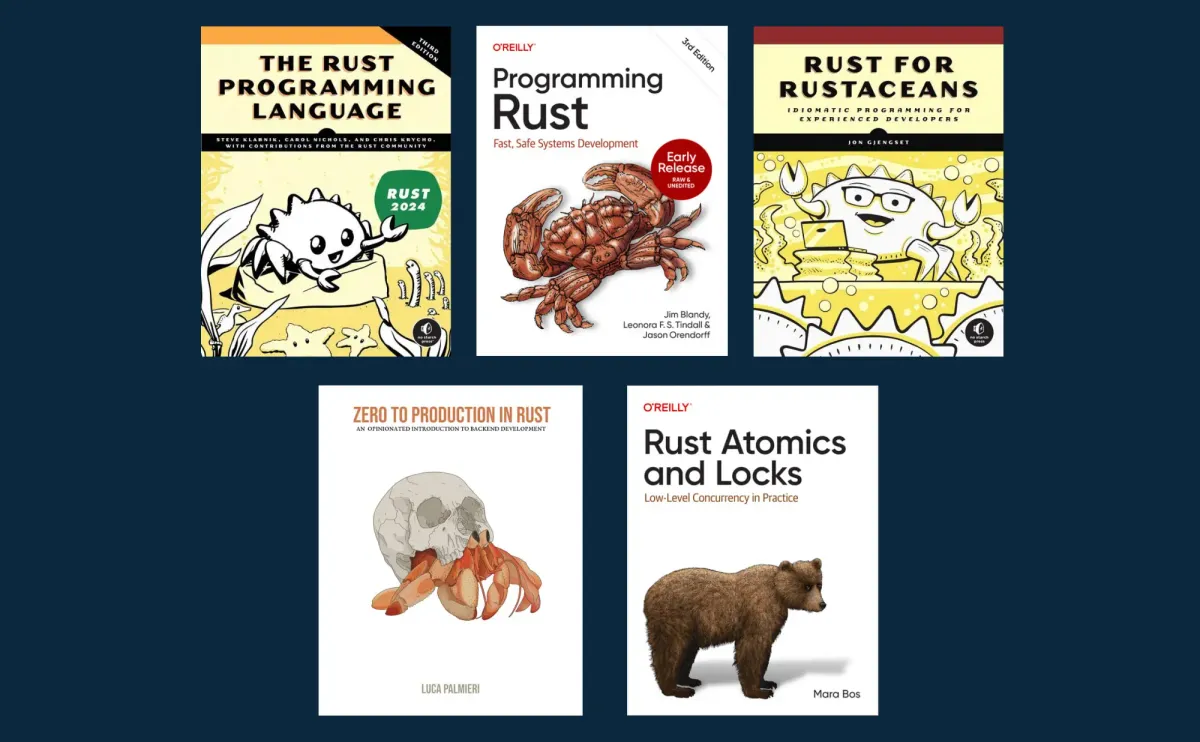
Rust influencers on LinkedIn
I hope you found this helpful! Share your thoughts, questions, or experiences.
Let's connect on LinkedIn or YouTube and build a community together.